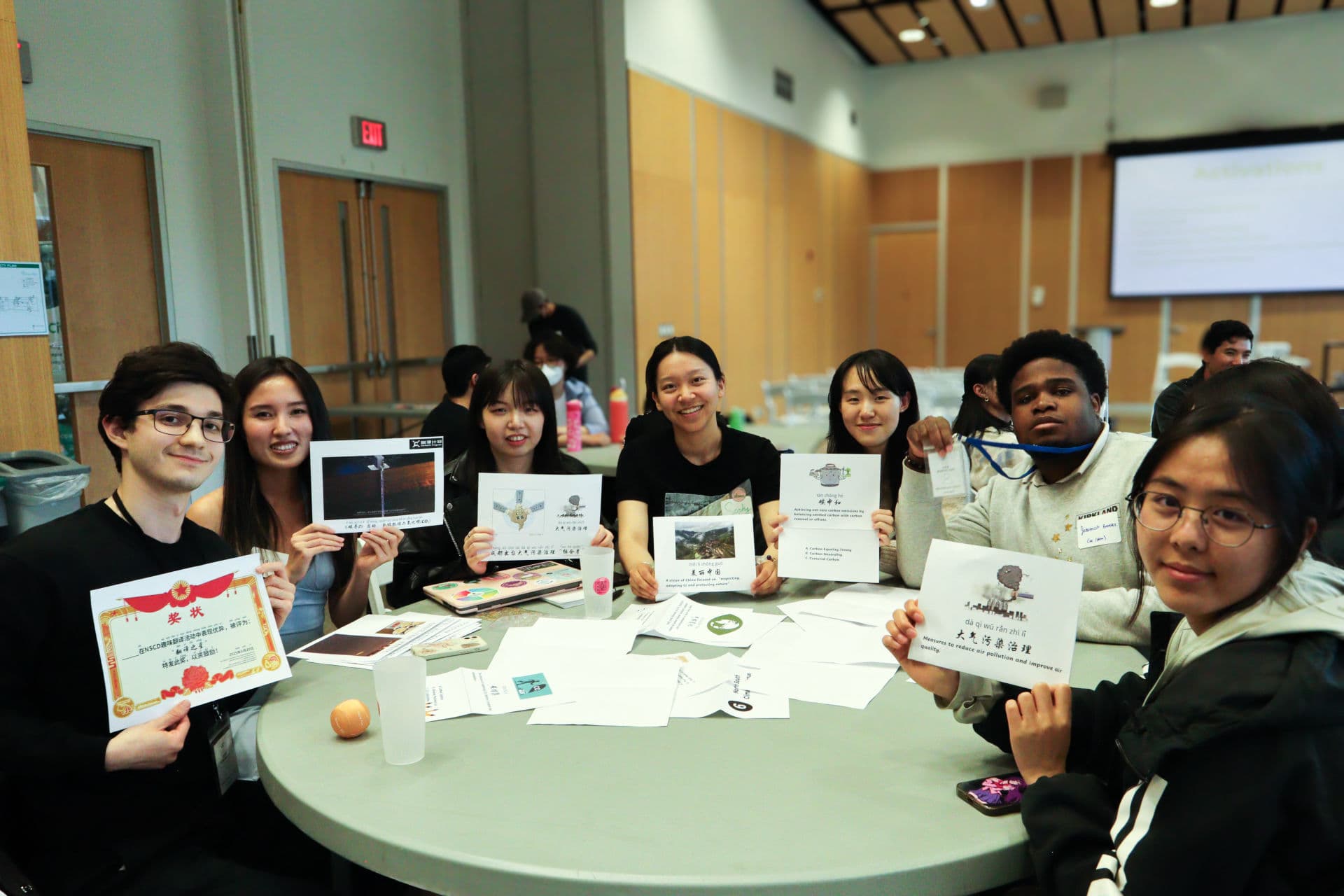
Participants and organizers gathered at CityHive Vancouver's Shifting Systems: Youth Action Community Showcase.
Learning Climate Across Languages: NSCD at CityHive
In May 2025, North South Climate Dialogue joined CityHive Vancouver's Shifting Systems: Youth Action Community Showcase, an evening celebrating youth-led action across climate, workplace equity, and community change.
For NSCD, this was more than a presentation. It was one of our first opportunities to test a simple question in a real community space:
Can language become an entry point for climate literacy?
Our answer, shaped through the energy of the room, was yes.
Why We Built a Climate Translation Game
Climate conversations often rely on technical terms: carbon neutrality, net zero, adaptation, mitigation, circular economy, climate justice. These words can already feel abstract in one language. Across languages, they become even more layered.
A direct translation may tell us what a word means, but not always how it is used, where it comes from, or why it matters.
At NSCD, we believe climate learning should not only be about memorizing definitions. It should also create space for people to ask:
- What does this term sound like in another language?
- What cultural or policy context does it carry?
- Who gets included or excluded when climate conversations happen only in English?
- How can multilingual communities bring their own knowledge into climate action?
That is why, for the CityHive showcase, we designed a playful bilingual climate terms activity. Participants explored Chinese and English climate vocabulary through printed cards, translation prompts, and group discussion.
What Happened at the Workshop
During the showcase, we invited participants to try a climate terms translation game. The activity introduced Mandarin Chinese climate terms and asked participants to guess, discuss, and interpret their meanings in English.
Some terms were technical, such as:
- 碳中和 — carbon neutrality
- 双碳目标 — dual carbon goals
- "1+N" 政策体系 — "1+N" policy framework
Others opened up broader conversations about climate news, policy context, and how different regions talk about climate action.
The format was intentionally simple. Participants could sit down, pick up a card, talk with someone nearby, and learn through conversation. Some people recognized the climate concept but not the Chinese wording. Others could read the Chinese but had to think carefully about how to explain the concept in English. The game created a small but meaningful space where everyone had something to learn and something to contribute.
Translation Is Not Just Word-for-Word
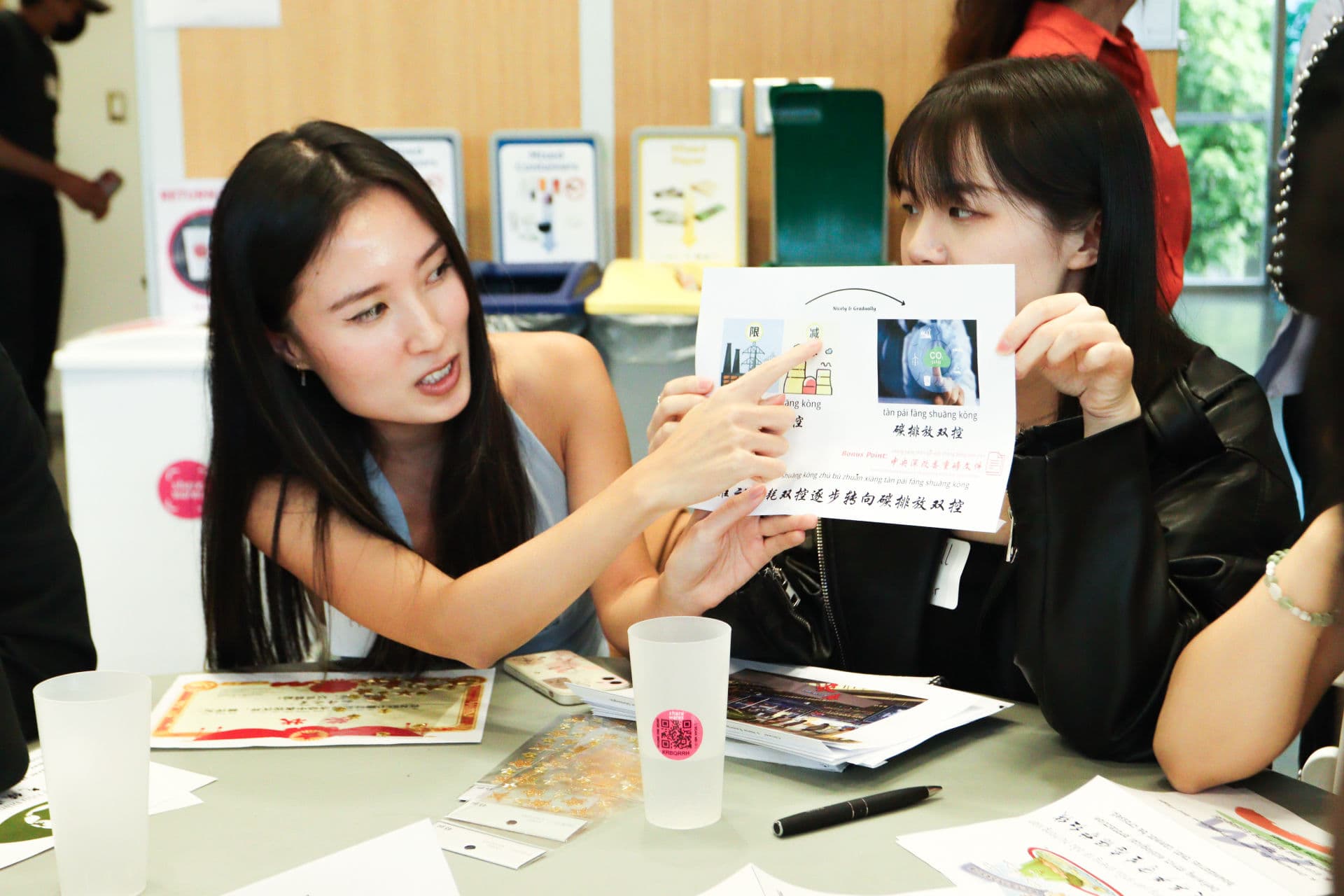
One of the clearest lessons from the workshop was that translation is not only about finding equivalent words.
For example, 双碳目标 is often translated as "dual carbon goals." But without context, that phrase may not mean much to someone hearing it for the first time. The term refers to China's climate targets to peak carbon emissions before 2030 and reach carbon neutrality before 2060.
That means the translation carries policy history, geography, and political context. A participant may understand the English words "dual," "carbon," and "goals," but still need a conversation to understand why this phrase matters.
This is exactly the kind of gap NSCD hopes to bridge.
Language can slow people down in productive ways. It asks us not only to define terms, but to explain where they come from and how they are used in real climate conversations.
A Space for Youth, Newcomers, and Cross-Cultural Learning
The showcase brought together youth from different programs, backgrounds, and experiences. For NSCD, it was especially meaningful to create a space where Chinese-speaking international students, newcomer immigrants, and English-speaking climate learners could meet through a shared activity.
Many people care deeply about climate change but may hesitate to join climate spaces when the language feels unfamiliar or overly technical. This is not a lack of interest. Often, it is an access issue.
By starting with a card game, we wanted to lower the pressure. Participants did not need to be policy experts. They only needed curiosity.
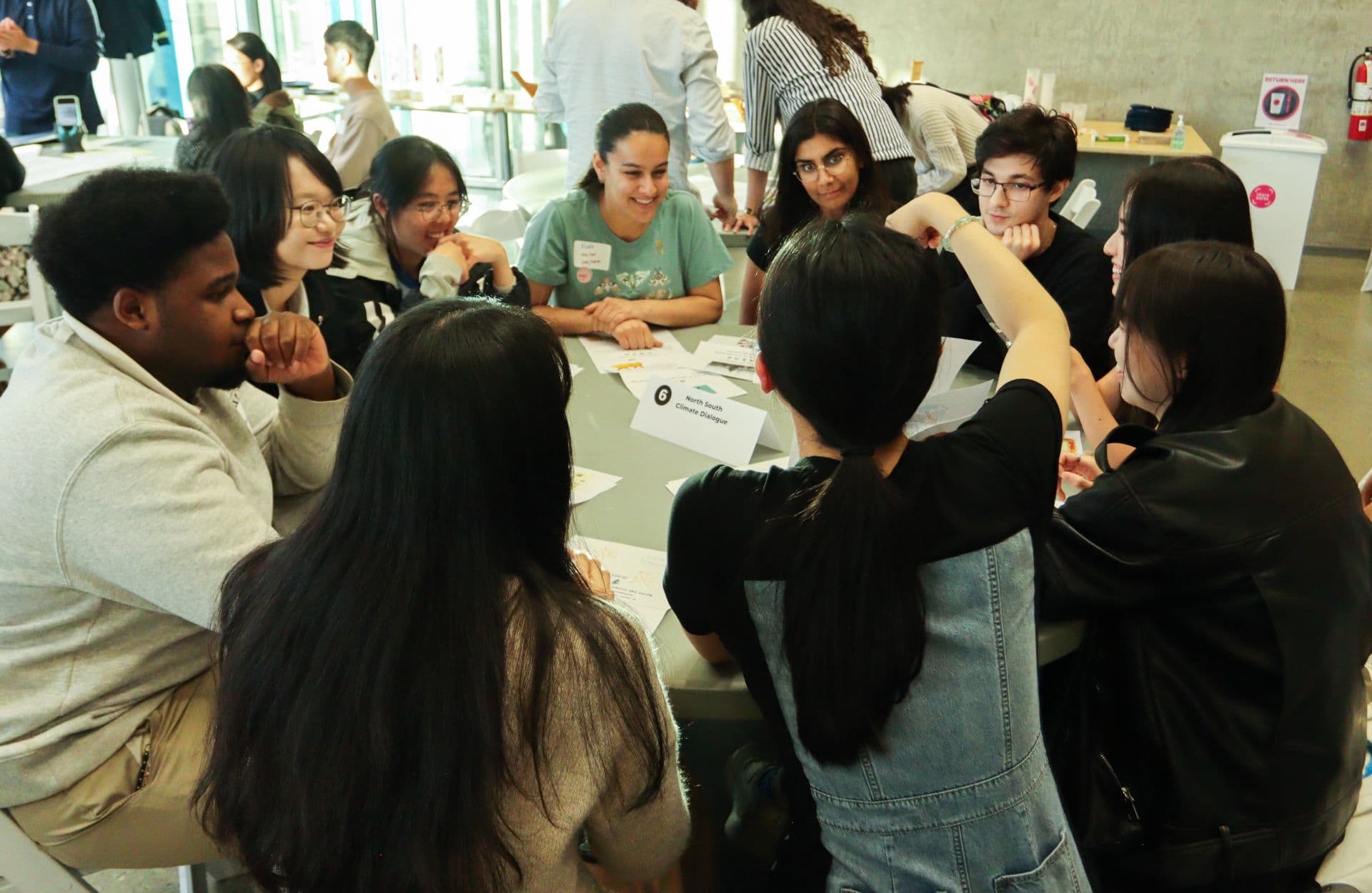
The result was warm, playful, and surprisingly thoughtful. People laughed at confusing translations, debated possible answers, asked about the meaning behind terms, and connected climate vocabulary to their own experiences.
Celebrating Climate Translators
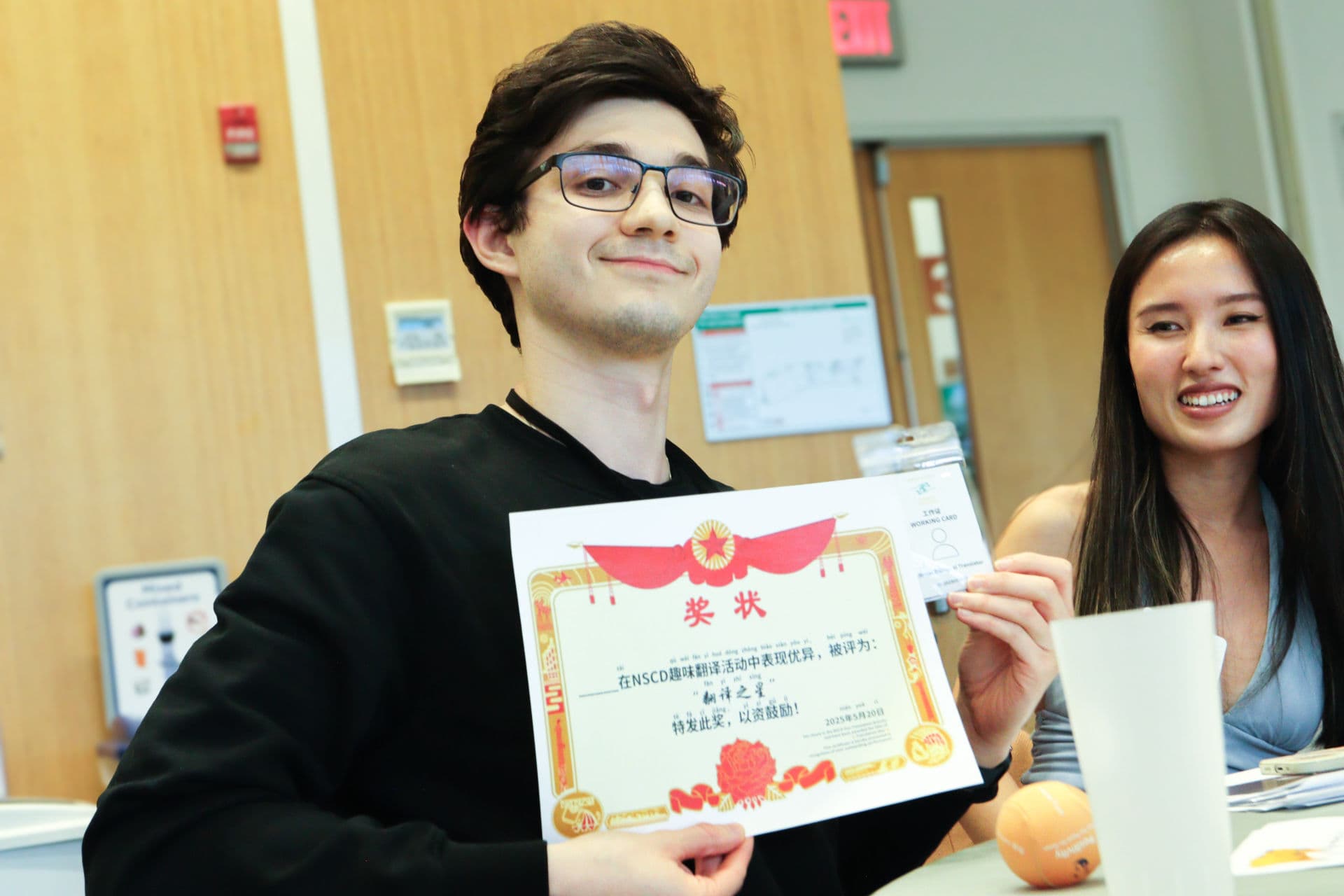
At the end of the activity, participants received playful "translator badges" to celebrate their learning. These small awards reflected a bigger idea behind NSCD:
Climate communication is real climate work.
When someone helps explain a term across languages, they are helping climate knowledge travel. When someone makes a difficult concept easier to understand, they are making climate action more accessible.
At the showcase, over 100 youth attended the broader event, more than 20 youth participated in our translation game, and more than 10 translator badges were awarded.
What We Learned
The CityHive showcase helped us see that NSCD's work does not need to begin with a complicated platform or a formal classroom. It can begin with a table, a few cards, and a question:
How would you explain this climate term to someone from another language background?
From that starting point, a simple game can open up deeper conversations about policy, culture, migration, education, and belonging.
We also learned that bilingual climate education works best when it is interactive. People remember more when they can touch the cards, guess answers, hear pronunciation, laugh at mistranslations, and talk through the meaning together.
The workshop confirmed something central to our mission:
Language can be a powerful entry point for climate literacy.
Looking Ahead
The CityHive showcase became an important early step for NSCD. It helped us refine our bilingual climate cards, test our workshop format, and imagine how this learning experience could grow into a larger platform.
Since then, we have continued developing our bilingual glossary, flashcards, quizzes, and learning tools. Our goal is to make climate language more accessible while creating opportunities for cross-cultural exchange between Chinese and English speakers.
We are grateful to CityHive Vancouver for creating a space where youth-led climate ideas could be shared, tested, and celebrated.
This workshop reminded us that climate action is not only about what we know. It is also about how we communicate, who feels invited into the conversation, and how we learn from one another across languages.
At NSCD, we are continuing to build from that belief — one word, one conversation, and one climate story at a time.